When I’m stuck staring at a blank screen, trying to bring a travel website to life, I do what any designer with good taste and a touch of panic does—I hunt for inspiration. Not just any examples, though. I look for the ones that feel sharp, smart, and a little bold. The kind that make you stop scrolling and think, “Okay, I need to take notes.”
In this roundup, I’ve pulled together 18 standout travel websites that deliver on both form and function. They’re clever with content, confident with design, and built to convert—without losing personality.
Here’s what you’ll find:
- Smart layouts that balance beauty with usability
- Design ideas that actually work across screen sizes
- Ways other creators handle storytelling without saying too much
- Subtle design cues that invite action
- Sites that feel fresh—even if the destination isn’t
Whether you’re planning a redesign or starting from scratch, these examples are here to spark your next big idea (and maybe save you from your third cup of coffee).
1. Airbnb

At first glance, Airbnb is all clean lines and crisp images. But dig just a little deeper, and you’ll see what really sets it apart—comfort with purpose. From the homepage alone, you get more than just listings. You get a feeling.
What’s clever? The way the site shows off homes that don’t look staged. They look lived in. That detail adds authenticity. The kind that makes you think, “Yep, I could stay here.”
And their navigation? It’s fast, smart, and doesn’t ask you to jump through hoops just to book a stay. There’s even a section for those spontaneous weekends when your suitcase packs itself.
Even their About page skips the corporate fluff. Instead, it shares a story—who they are, what they believe, and why you might want to trust them with your vacation.
The whole experience feels personal without being pushy. It’s like a good host: helpful, thoughtful, and not standing over your shoulder.
Airbnb doesn’t just show homes. It shows possibilities—with a side of welcome.
2. Travelocity
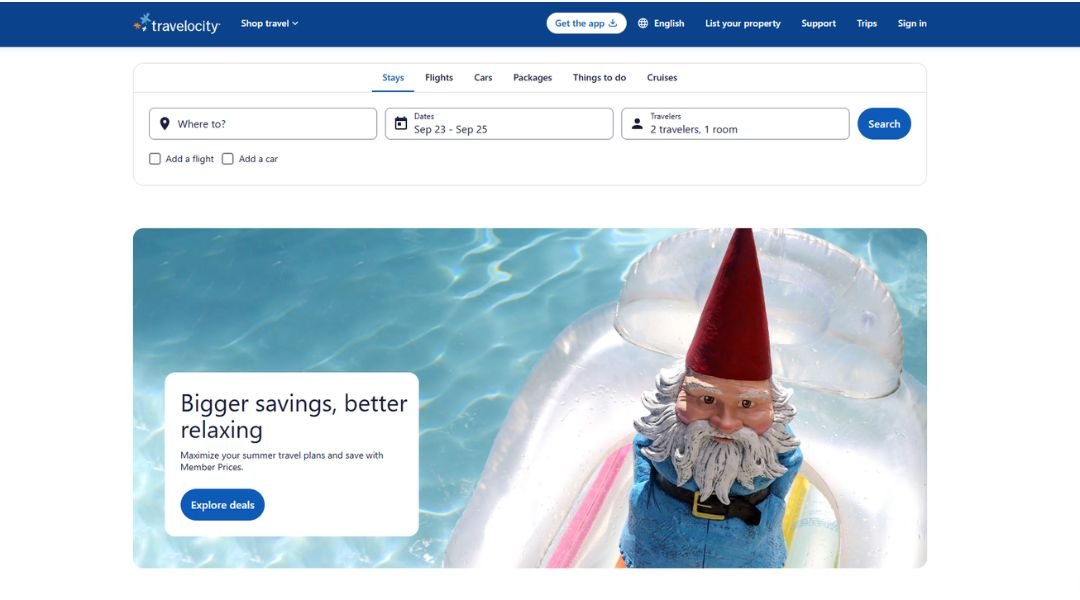
Travelocity doesn’t waste your time. You land on the site, and it’s all there—flights, hotels, cars, and packages lined up like a checklist that’s already halfway done. It’s built for people who don’t need a travel agent—they just need a plan that works.
Right away, the gnome makes an appearance. Yes, he’s quirky. But he’s also oddly reassuring, like a travel buddy who’s done this a hundred times. That splash of humor lightens the experience without making it feel gimmicky.
What stands out? The simplicity. No confusing filters or endless steps. Booking feels less like a chore and more like checking something off your wish list.
And when things go sideways (as travel sometimes does), their customer support doesn’t vanish into the clouds. That builds trust, fast.
Even the way they show deals—bold, clear, and not hidden behind ten pop-ups—makes the process feel transparent.
Travelocity gets that you don’t need a travel philosophy. You need a flight that lands on time and a hotel that doesn’t surprise you. It’s practical, friendly, and built to move.
Because when you’re planning a trip, less hassle is the real luxury.
3. Expedia
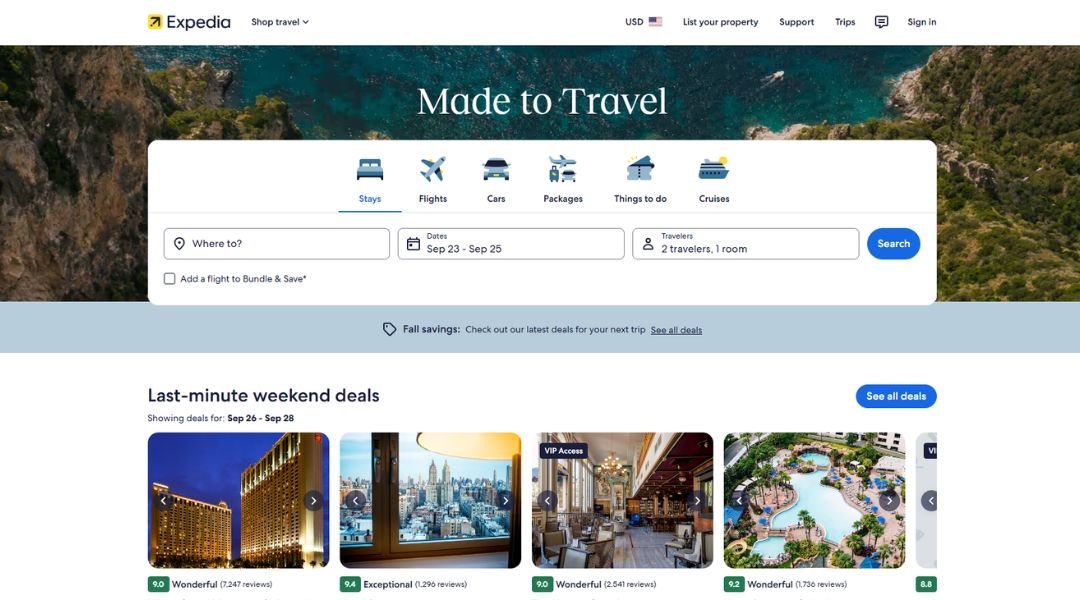
Expedia gets it—you’ve got places to be. The moment you arrive on the site, it’s all about momentum. Flights, hotels, cars, even things to do once you land. No fluff. No detours. Just straight to the point.
One thing that clicks? The way Expedia stacks your entire trip in one place. Book a flight, grab a room, toss in a rental car—and boom, it’s a package. Less clicking around. More getting on with it.
Their interface is clean, modern, and doesn’t try too hard to impress. It just works. Even if you’re not a travel pro, you won’t feel lost.
There’s also a loyalty program tucked in there that actually feels rewarding. It’s not trying to bribe you—it just quietly thanks you for coming back.
And if something goes off-script (hello, delayed flights), support doesn’t ghost you. That reliability earns points—real ones.
Expedia doesn’t throw around buzzwords or pretend to be your travel guru. It simply helps you go—confidently, quickly, and maybe even with a little excitement.
Because booking shouldn’t feel like a layover. It should feel like the start of something good.
4. Gocollete
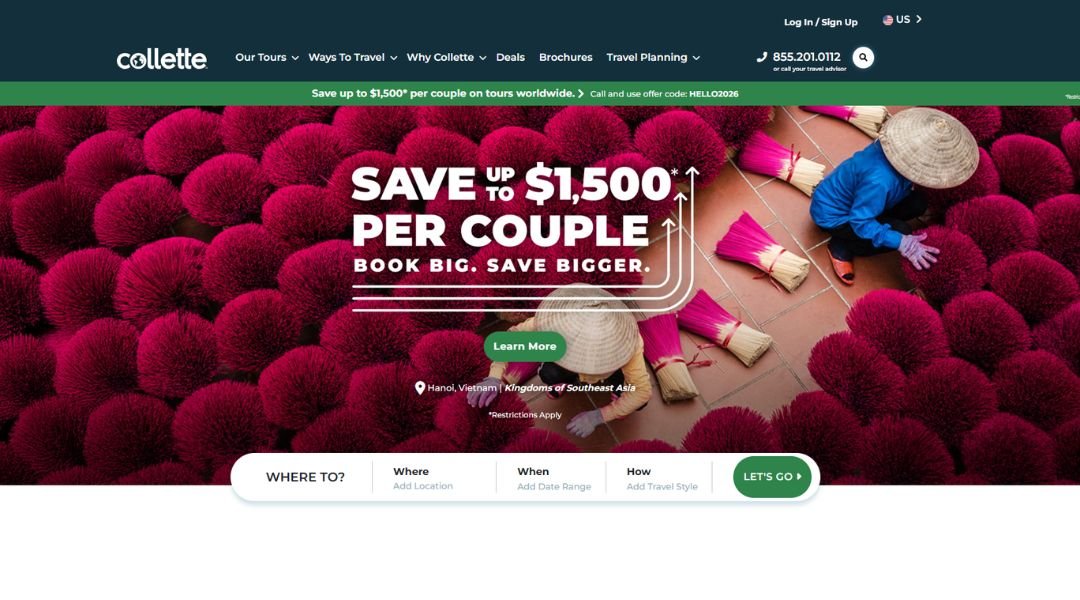
Collette doesn’t just send you places. It takes you there with purpose. The site welcomes you with curated tours, not endless tabs. From Europe to the Americas, every trip feels like it was planned by someone who’s actually been there—and didn’t forget the snacks.
What stands out? Clarity. Tours are laid out with full itineraries, real departure dates, and pricing that doesn’t play hide and seek. You know what you’re signing up for before you ever click “book.”
It’s also reassuringly human. There’s a strong sense that someone’s thought through the logistics—how you’ll get from one landmark to the next without sprinting through a train station. You’re not just seeing the world; you’re actually experiencing it, without juggling three maps and a phrasebook.
And while many travel sites feel like booking engines with a blog attached, Collette feels guided—like a seasoned traveler who also knows where the clean restrooms are.
Whether you’re chasing castles, coastlines, or culture, Collette takes care of the details. You just show up and enjoy the view.
5. Agoda

Agoda keeps things simple—just the way travelers like it. From the first click, it’s clear this site was made for people who want more booking, less backtracking.
What’s refreshing? The speed. Search results load fast, and filters actually work. Want a beachfront villa with breakfast and free Wi-Fi? Agoda finds it in seconds—no guesswork, no filter rage.
There’s also real transparency here. Prices aren’t dressed up with surprises at checkout. You see what you’ll pay, and it often comes with a pleasant “oh, that’s cheaper than I thought” moment.
The site leans heavy on hotels and vacation stays, but it quietly handles flights and airport transfers, too. That means fewer tabs open and more time thinking about whether to pack sandals or sneakers.
And the mobile app? Surprisingly slick. It’s like having a tiny travel assistant in your pocket—minus the awkward small talk.
Agoda doesn’t overpromise or overwhelm. It just helps you find a place to stay, quickly and confidently. Because the only thing worse than jet lag is a bad booking.
6. Thrillophilia
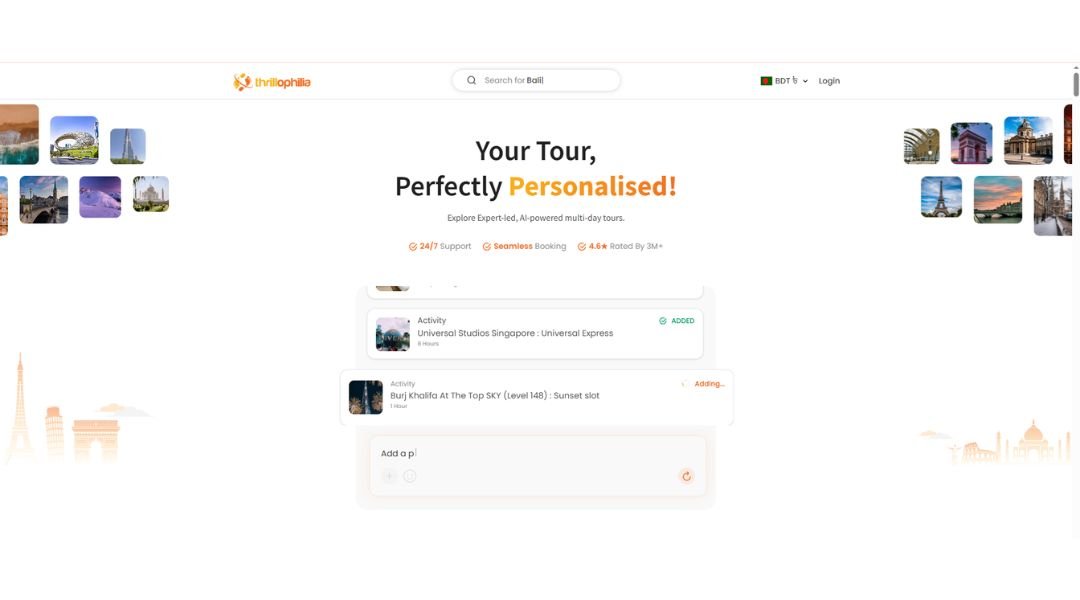
Thrillophilia isn’t your typical travel site. It’s built for people who’d rather zipline through a forest than scroll through endless booking forms. Right from the homepage, it’s clear: this platform is all about experiences.
You won’t just find hotel rooms here—you’ll find camel rides in the desert, treks in the Himalayas, scuba dives in clear blue water. Basically, if it gets your heart rate up (in a good way), it’s probably on Thrillophilia.
What works? The layout. Experiences are neatly categorized by destination, interest, or adrenaline level. And the booking flow? Straightforward. You won’t need a survival guide to get through it.
They also add helpful details: age limits, activity duration, and what to pack—so you’re not showing up to a snow trek in flip-flops.
Whether you’re planning your first bungee jump or your fifth group trip, Thrillophilia keeps things smooth and stress-free. It’s like having an adventure planner who’s actually done the stuff they’re recommending.
If your idea of travel includes more than just hotel buffets, this is where the fun starts—without the hassle.
7. Costco Travel
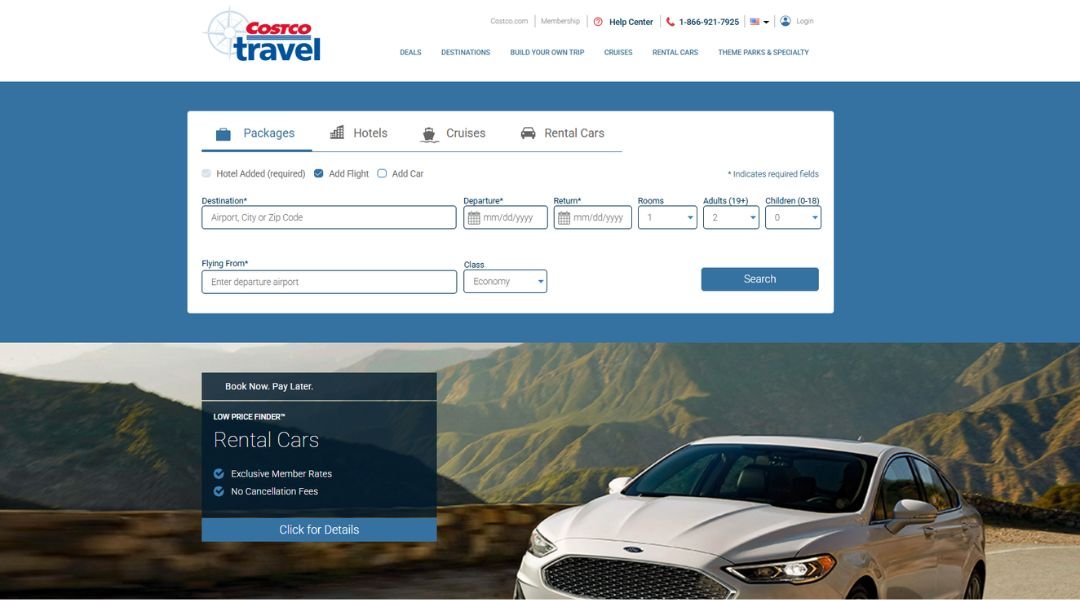
Costco Travel is what happens when vacation planning meets warehouse-level efficiency. It’s simple, no-nonsense, and packed with value—just like the stores.
From the first page, it’s clear this is built for people who want their trip booked before the coffee finishes brewing. Flights, hotels, cruises, car rentals—everything’s bundled smartly. And yes, it’s all exclusive to members, which somehow makes it feel like you’re in on a really good secret.
What’s great? The pricing. You won’t need to open five tabs to compare deals. The savings are upfront, and the extras—like room upgrades or resort credits—often show up where you’d least expect them. Nice surprise.
The interface won’t win design awards, but it doesn’t need to. It’s clean, it’s clear, and it won’t waste your time.
Best part? There’s a certain peace of mind knowing Costco had a hand in planning your trip. If they can sell you a kayak next to a 6-pound lasagna, they can probably handle your vacation.
It’s travel with bulk benefits—and a lot less fine print.
8. Kayak
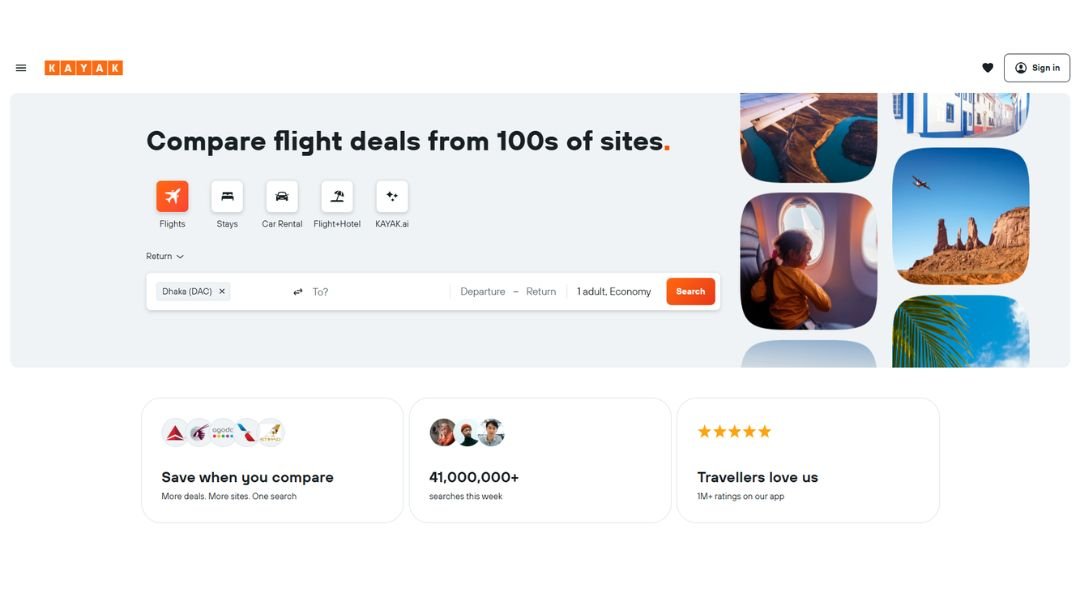
KAYAK doesn’t sell flights or hotel rooms—it finds them. Think of it as the travel world’s search engine that doesn’t get sidetracked. You tell it what you need, and it pulls the best deals from all over the internet, without trying to sell you something mid-scroll.
What stands out? Speed. Searches load fast, filters are intuitive, and if you’re indecisive, the flexible dates tool is basically a time-traveling money-saver.
They also toss in little extras—like price trend forecasts and alerts—so you can stop checking flights every 12 minutes. Helpful without hovering.
Visually, it’s clean. No pop-ups screaming about “last minute deals” every five seconds. Just well-organized results and tools that actually help.
And if you’re feeling spontaneous, the “Explore” feature shows you where you can go based on your budget. Spoiler: it’s probably further than you think.
KAYAK is for travelers who like control but wouldn’t mind a bit of help behind the scenes. It’s smart, slick, and doesn’t waste your time—because the only thing worse than a layover is a cluttered booking site.
11. Goway
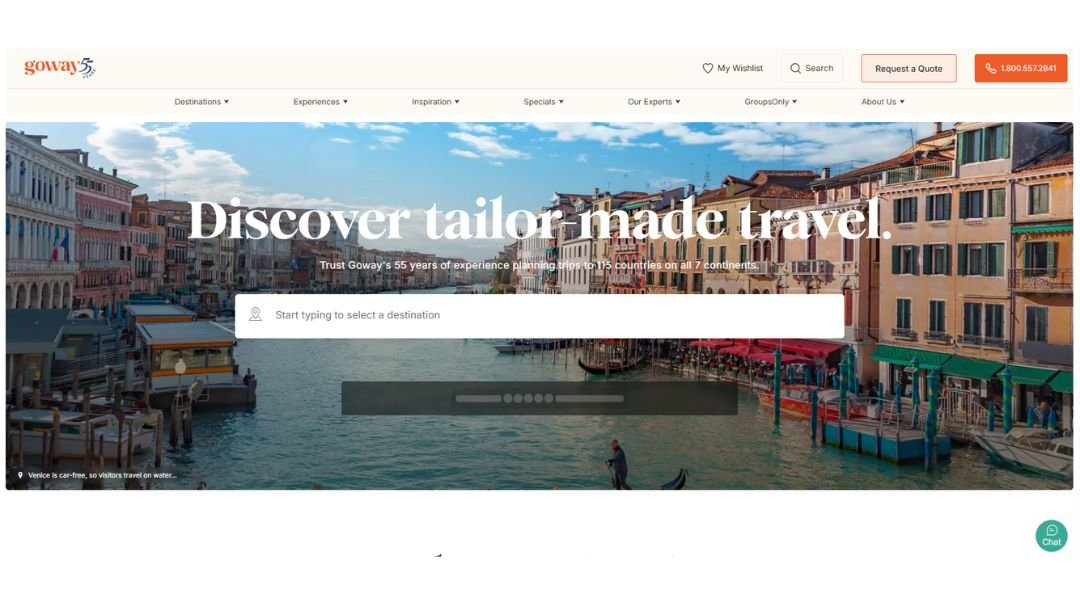
Goway isn’t built for tourists. It’s built for travelers—the kind who want to go farther, stay longer, and come back with stories worth telling.
From the start, the site feels like a well-traveled friend guiding you through options you didn’t even know existed. Yes, you’ll find Europe and Australia—but also Africa, the Arctic, and places most booking sites skip.
Goway’s real strength? Customization. You’re not stuck with cookie-cutter packages. Want a private safari with a stopover in Dubai? It’s possible. They’ll help make it work—and won’t make you fill out 14 forms to get started.
The layout is dense but purposeful. Trip types, regions, and experiences are clearly mapped out, so you can explore without feeling overwhelmed. Even the brochures feel more like inspiration than sales material.
Support is built in, too. Real advisors, not just chatbots pretending to care.
If you’ve outgrown basic itineraries and you’re ready for something bold (but organized), Goway makes sure your big trip doesn’t come with big headaches.
Because “once in a lifetime” trips deserve more than just a quick checkout page.
12. Jetblue
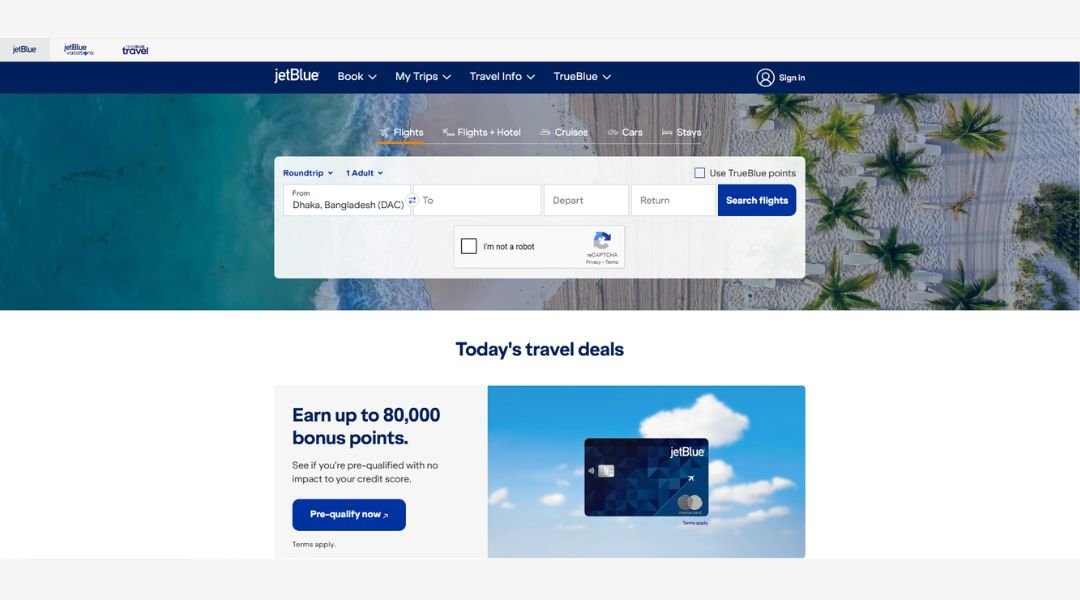
JetBlue gets one thing right from the jump: people actually want to enjoy flying. And somehow, they’ve made that feel possible—without turning the plane into a luxury lounge or jacking up the ticket price.
Booking on the site is a breeze. No mystery fees hiding in the shadows. Just clean options, clear prices, and seats you can actually pick without pulling your hair out.
The best part? You get perks that feel like, well, perks. Free snacks. More legroom. Wi-Fi that doesn’t time out halfway through your email. It’s not flashy, it’s just thoughtful.
The site also gives you quick access to flight status, travel flexibility tools, and a rewards program that doesn’t require a spreadsheet to understand.
JetBlue doesn’t try to be everything to everyone. But if you’re looking for a smooth booking process, a comfortable flight, and the sense that a real human designed the experience—it delivers.
Flying with JetBlue feels less like checking a box and more like starting your trip on the right note.
11. Trip Advisor
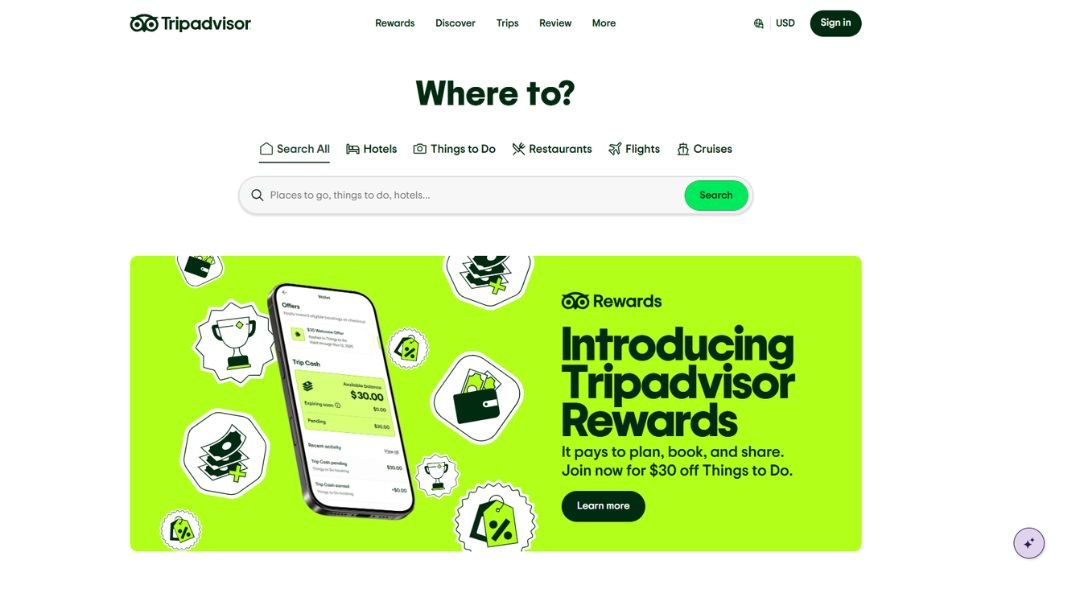
Tripadvisor is what happens when millions of travelers decide to leave receipts. Hotels, restaurants, activities—you’ll find it all, ranked, rated, and ruthlessly reviewed.
Right off the bat, it’s easy to search and filter. Whether you’re hunting for a beachfront escape or just trying not to book a hotel next to a nightclub (unless that’s your thing), Tripadvisor helps you make smarter choices—fast.
What sets it apart? The reviews. Yes, they can be dramatic. But they’re real, and that’s the point. There’s comfort in knowing someone else already tested the mystery buffet or figured out the trick to that “ocean-view” room.
Beyond opinions, the site also lets you book. Hotels, tours, even restaurants—right there, with no app-switching gymnastics.
The layout’s clean, and the photos are a mix of professional and wonderfully unfiltered traveler shots. You’ll know exactly what you’re walking into.
Tripadvisor isn’t just about stars and scores. It’s about walking into your trip with eyes open—and maybe avoiding that “what did we just book?” moment.
12. Booking
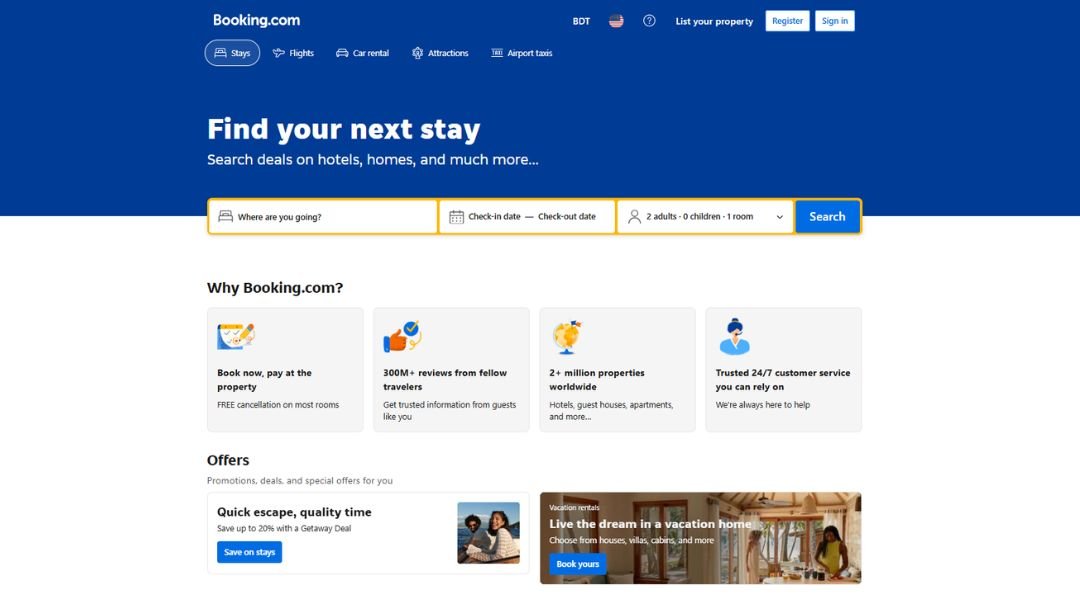
Booking.com is built for travelers who don’t have time to play guessing games. From the first search, you get exactly what you came for—places to stay, clear prices, and filters that actually make sense.
What’s especially useful? The honesty. Each listing shows reviews, cancellation policies, and photos that haven’t been polished into fantasy. If the walls are pink, the pictures will show pink. No surprises, and that’s a good thing.
The platform covers everything—from five-star hotels to treehouses you didn’t know you needed. You can also book flights, airport taxis, and local experiences, all without leaving the site. It’s like a one-stop shop that doesn’t try to upsell you every three seconds.
They also make changes and cancellations refreshingly easy, which is more than you can say for a lot of travel sites. And with that “Genius” loyalty program? You don’t need to be a frequent flyer to start seeing perks.
Booking.com doesn’t overcomplicate things. It just works—so you can book, pack, and relax.
13. AAA Travel
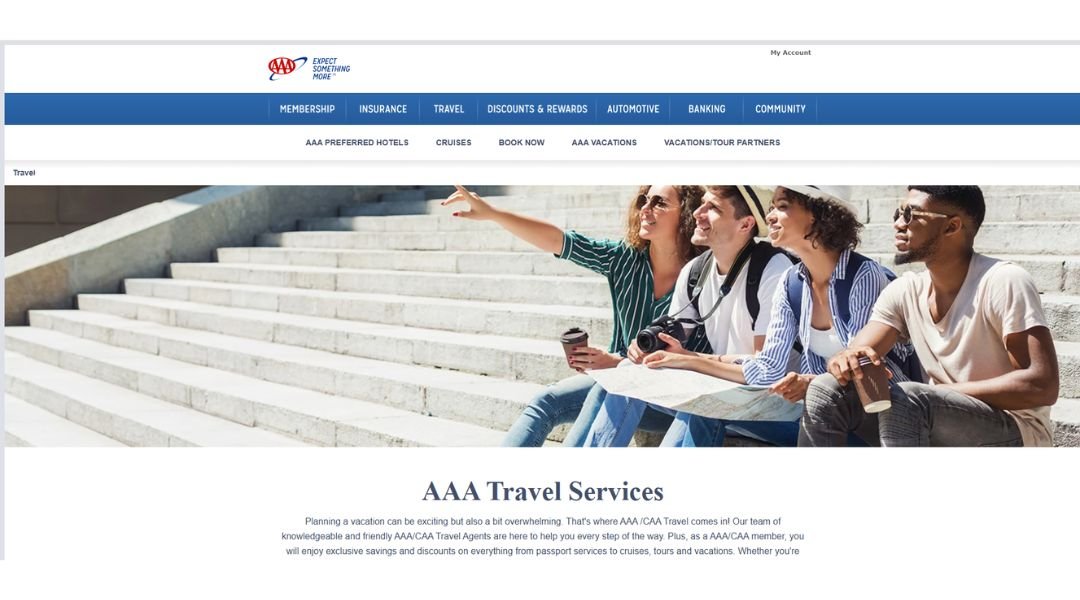
AAA Travel brings the comfort of a trusted name to a space that’s often full of fine print and “limited time only” banners. It’s for travelers who like smart planning, not travel drama.
From cruises and guided tours to car rentals and hotel deals, everything is organized clearly. No scavenger hunts, no surprise fees at checkout. And yes—those member discounts are very real (and sometimes surprisingly good).
What’s great? You don’t have to be a travel expert to use it. Whether you want a simple weekend road trip or a multi-country vacation, AAA makes it feel manageable—even if your passport’s still hiding in a drawer.
Plus, there’s real support behind the screen. You can talk to an actual travel agent if you want someone to double-check your plans or steer you away from a “looks-better-online” resort.
AAA Travel isn’t flashy. It’s practical, reliable, and refreshingly low on nonsense. For people who want value, service, and the occasional perk—without downloading five apps to get it—this one’s a keeper.
14. Lonely Planet
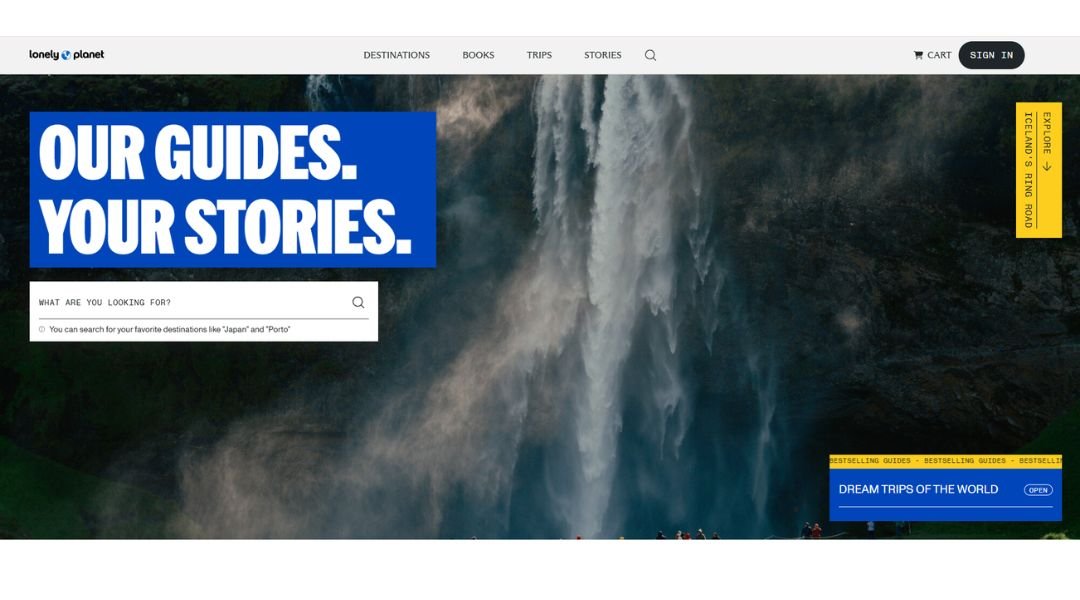
Lonely Planet isn’t trying to sell you flights or hotel deals. It’s here to give you the lowdown—honest, well-researched, and free of glittery marketing language. Think of it as the seasoned traveler who knows when to splurge, when to skip the line, and where the locals actually eat.
From destination guides and travel tips to cultural insights, the site is packed with useful info. No pop-ups pushing vacation packages. Just real guidance written by people who’ve been there, taken notes, and survived the local transit system.
The layout’s modern and scroll-friendly, and the writing? Surprisingly readable. Even the deep-dive articles feel like conversations, not lectures. You can plan your trip without feeling like you’re cramming for an exam.
There’s also a solid mix of inspiration and practicality. You’ll find hidden gems, packing lists, safety tips—and none of it feels recycled.
Lonely Planet doesn’t try to be everything. It just wants you to travel smarter, better, and maybe even braver. For people who like their research with a side of realism, this is the site to bookmark.
15. Smart Trip
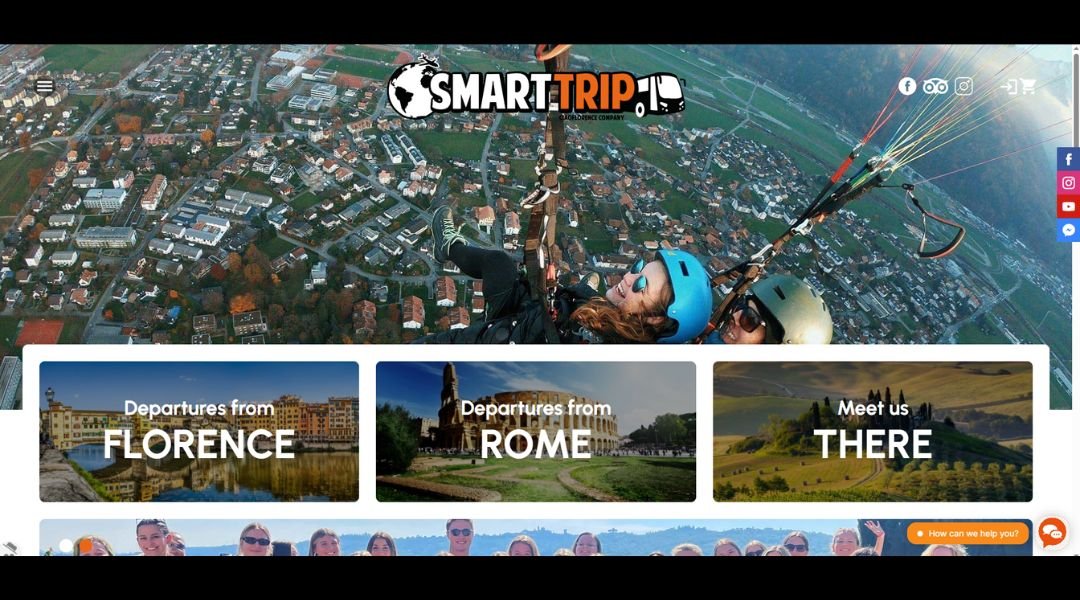
SmartTrip is built for students—but not the kind who want to spend their weekends studying. It’s for those looking to see Europe without draining their entire savings or booking a trip that feels like a group project gone wrong.
Right from the homepage, things are simple. Trips are clearly listed, pricing is transparent, and the vibe is casual but organized—kind of like your favorite campus club, but with passports.
What stands out? It’s not just about sightseeing. These trips are designed for younger travelers who want cultural highlights and nightlife, with just the right amount of structure (and none of the boring stuff).
They handle transportation, accommodation, and entry to top spots, so you’re not scrambling to figure out local buses or museum hours. You just show up and enjoy.
Plus, the group sizes and guides make it feel more like traveling with friends than being herded around by a flag-waving tour leader.
SmartTrip makes student travel fun, stress-free, and just adventurous enough to tell stories about later.
16. CNN Travel
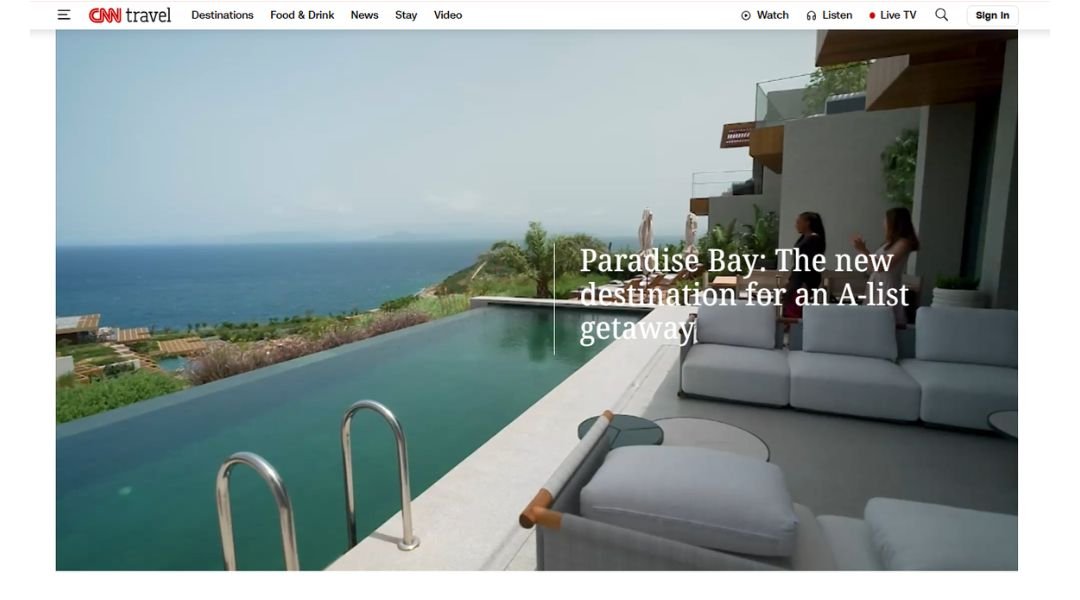
CNN Travel isn’t trying to sell you hotel rooms or bundle your flights. Instead, it does what CNN does best—delivers stories. But this time, it’s about places you want to go, not just current events you can’t escape.
The site blends travel inspiration with global awareness. You’ll find stunning destinations, insider guides, and “need-to-know-before-you-go” updates—like passport changes, strikes, or which island is suddenly trending (and why).
What makes it different? The journalism. These aren’t just listicles packed with stock photos. The content is researched, timely, and written by actual reporters who dig into culture, context, and what it means to travel there now.
There’s also a good mix of light and serious. You might read about a remote eco-hotel one minute, then shift to travel safety tips the next. It’s useful without being boring.
CNN Travel is for curious minds and responsible wanderers—people who like their travel daydreams with a side of real-world perspective.
Because sometimes, the best trips start with a well-written headline.
17. ViaHero
ViaHero isn’t your average trip planner. Instead of sorting through a hundred blog posts or risking another “hidden gem” that turns out to be a tourist trap, you get matched with a real local—your Hero—who builds a custom itinerary just for you.
It’s not a tour. It’s not a template. It’s a personalized travel plan, made by someone who actually lives where you’re going. They handle the details: where to stay, what to eat, how to get around, and what’s worth skipping. You get offline maps, local tips, and a daily plan that fits your vibe—no guidebooks or guesswork required.
The price? Clear and upfront. No surprise fees or last-minute upsells. Just honest help from someone who knows the streets, not just the search results.
Whether you’re chasing culture, food, adventure—or just want to avoid looking lost—ViaHero gives you the confidence to explore like you belong there.
Because the best way to see a new place is through the eyes of someone who calls it home.
Conclusion
So, that’s my shortlist—18 travel websites that caught my eye and earned a spot on the inspiration board. Some are bold, some are minimal, but all of them are built with intent. And that’s the real win: design that not only looks good but makes sense.
If even one layout, image, or section made you think differently about your own project, then we’re on the right track. Because good design doesn’t need to shout. It just needs to know what it’s doing.
Now if you’ll excuse me, I’ve got three browser tabs open—and a sudden urge to book a trip I definitely wasn’t planning.